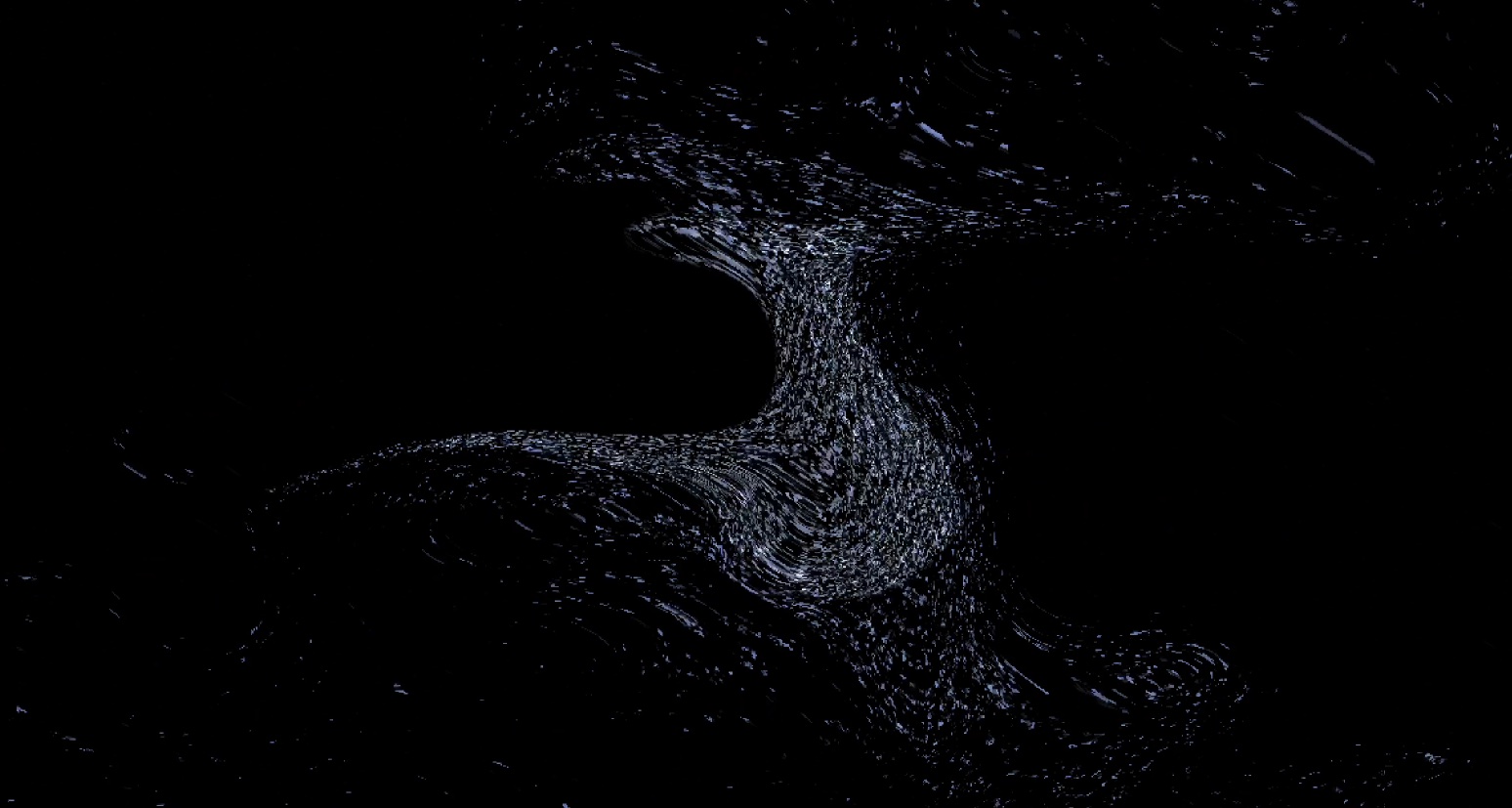
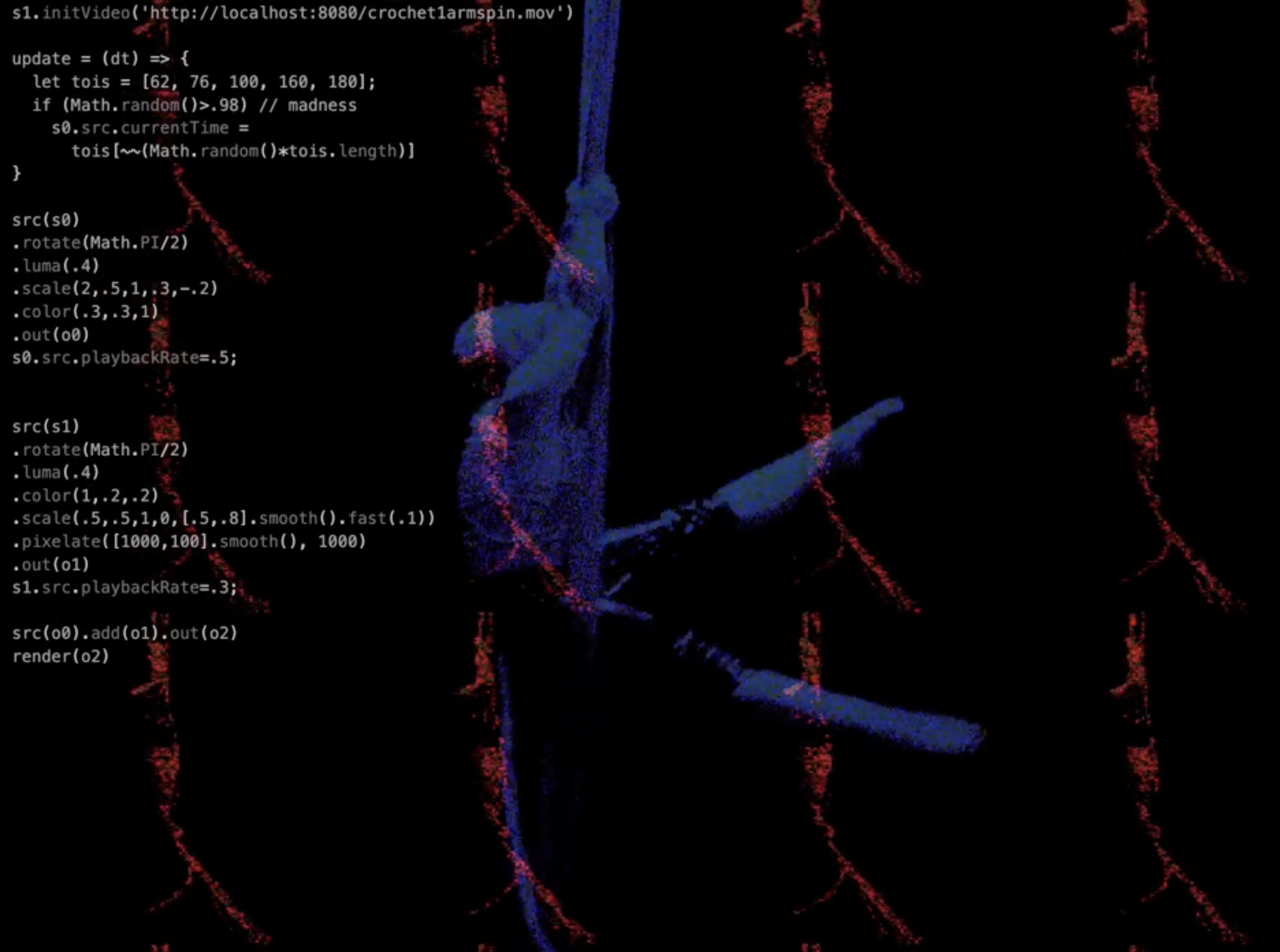
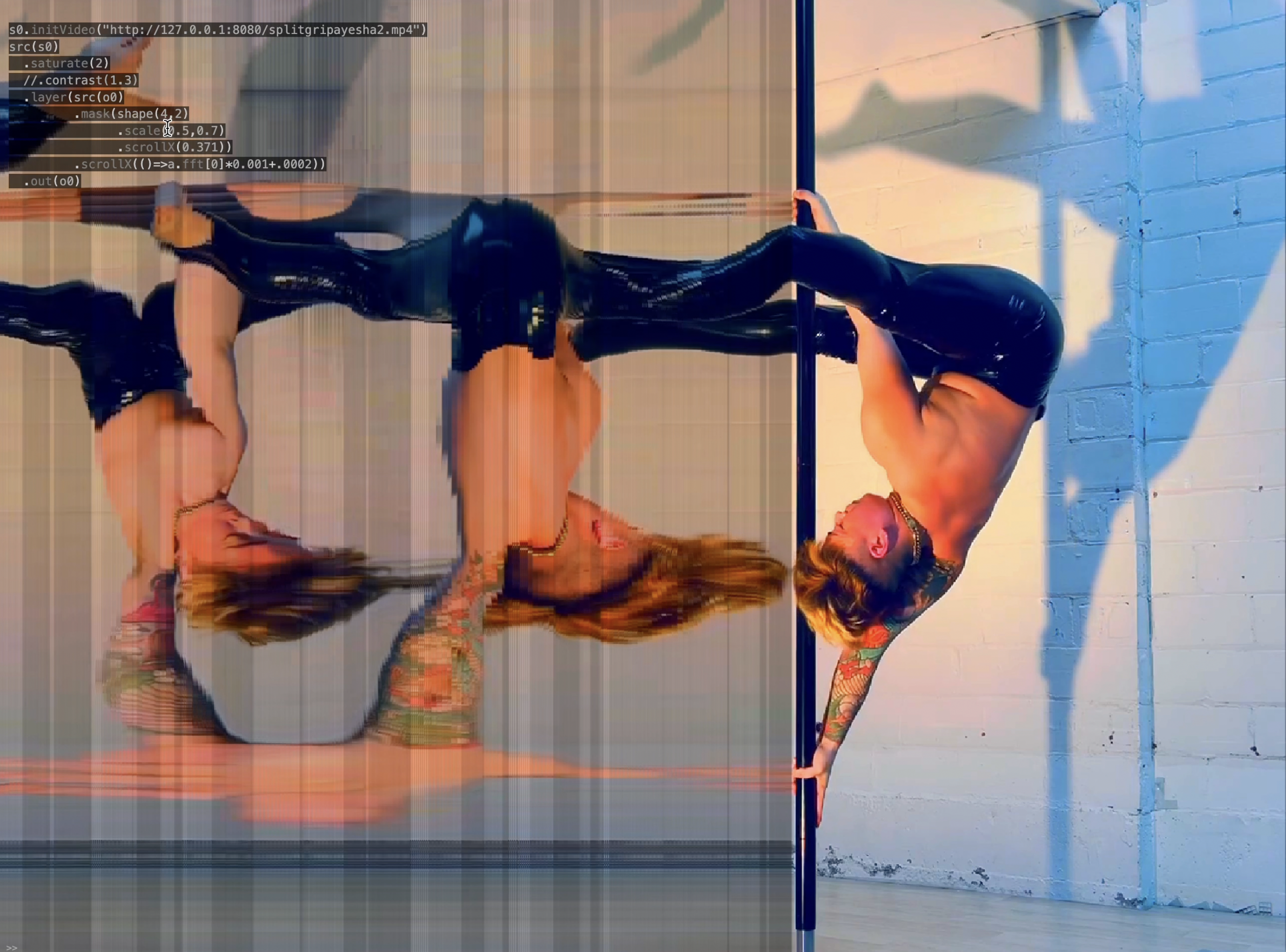
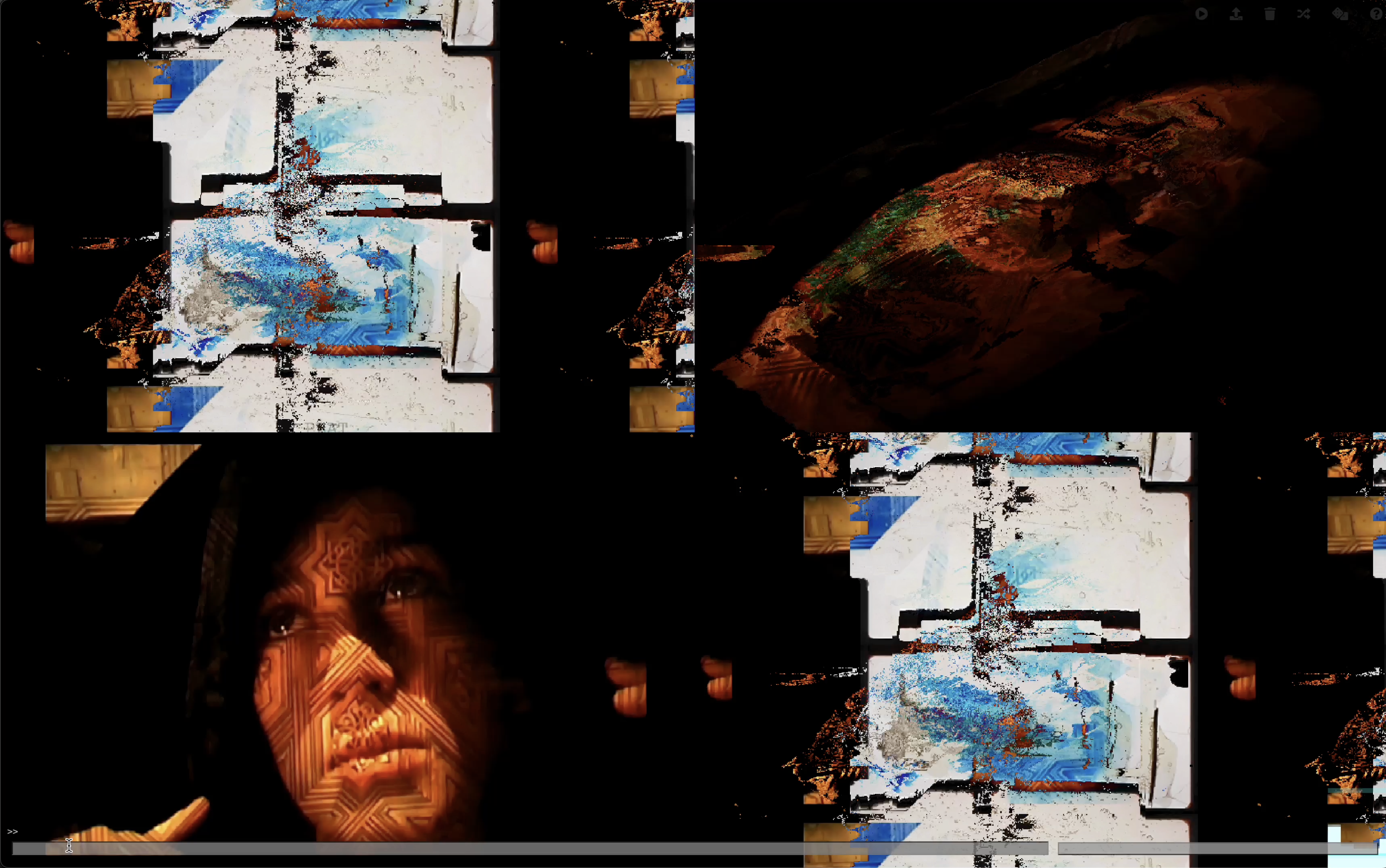
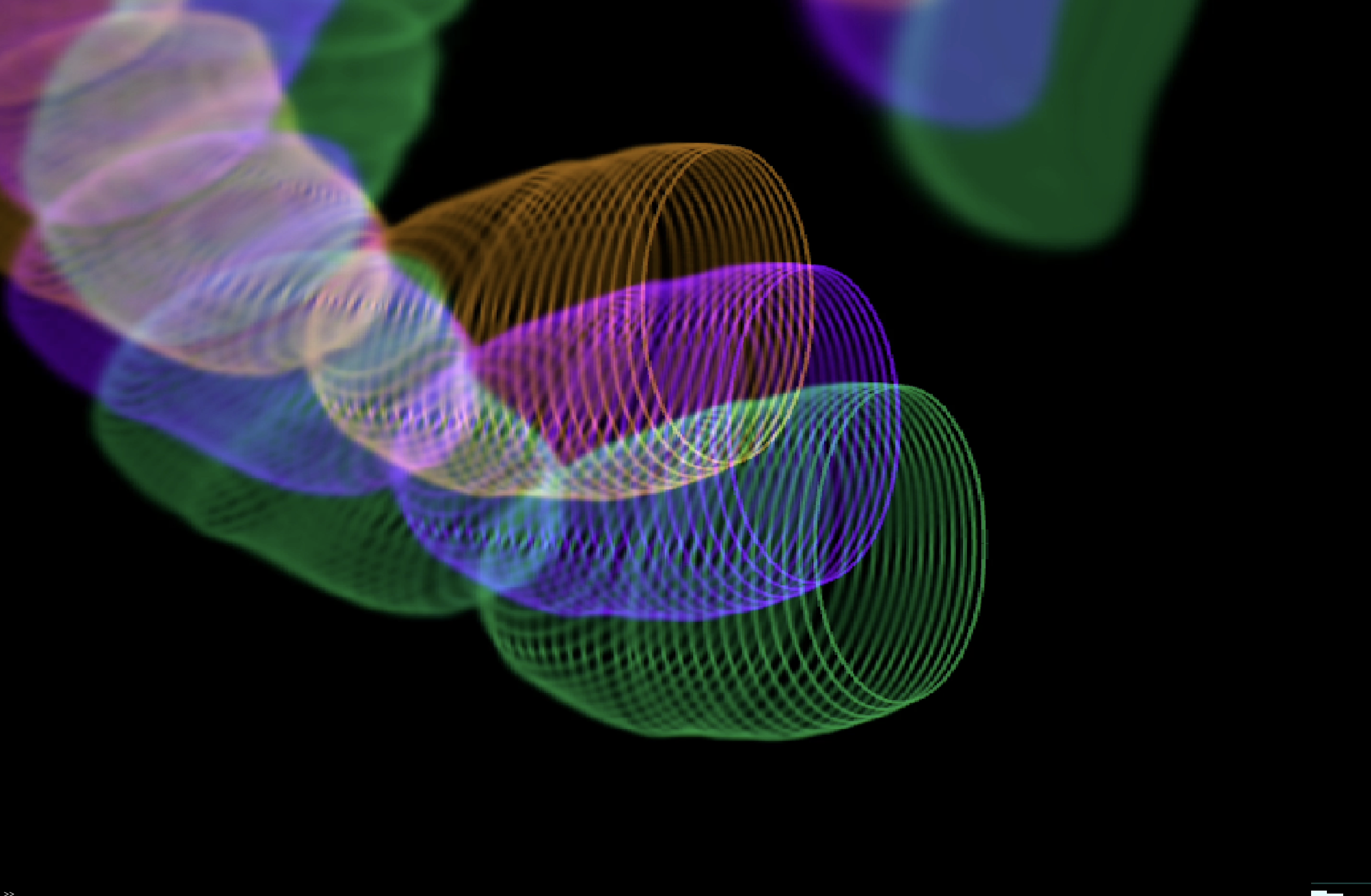
played more with p5 generation, this time looking at more fft bins than i normally do (usually just hit the lowest bin because it’s the most obviously correlative, but this viz shows very clear correlates to all bins)
// Fft ersatz 3d timeseries // p5 canvas recursion: p5 x hydra @errorbesque p.remove() p = new P5(); // setup cnv=p.createCanvas(400,400); oldCnv=p.createGraphics(p.width,p.height); p.noFill(); // reset p.background(0); v0y=p.height/2; v0y2=p.height/2; p.draw = () => { if ((a.fft[0]<0.4 && p.frameCount%5!=0)) return; oldCnv.image(cnv,0,0,p.width,p.height); oldCnv.loadPixels(); p.imageMode(p.CENTER) p.angleMode(p.DEGREES) p.push() p.translate(p.width/2, p.height/2); p.image(oldCnv,-12,p.sin(p.frameCount)*2,400,400); p.pop() a0=a.fft[0]+a.fft[1]; p.stroke(255,0,255,200); di=50 p.strokeWeight(2) if(p.random(-1,1)>0) p.blendMode(p.ADD) p.ellipse(p.width/2,p.height/2,di*a.fft[1]/2,di*a.fft[0]*2+2); p.stroke(255,255,0,200) v0y+=p.random(-2,2); p.ellipse(p.width/2+10,v0y+p.sin(p.frameCount/10),di*a.fft[1],di*a.fft[0]*2+2); p.stroke(0,255,255,200) v0y2+=p.random(-2,2); p.ellipse(p.width/2-10,v0y2+p.sin(p.frameCount/10),di*a.fft[1],di*a.fft[0]*2+2); p.blendMode(p.BLEND) } s0.init({src:p.canvas})src(s0).out(o0) src(o0) .scrollX(.05) .blend(src(o0).pixelate(1000,2).modulate(src(o2).scale(.999)), ()=>a.fft[2]/3).hue([0.32].smooth().fast(.1)).out(o1) src(o1) .scrollX(-.1) .scale(1.15) .modulate(src(o2).scale(1.01) .pixelate(1000,1000),0.0) .out(o2)render(o2)a.show()a.setSmooth(.4)