Hydra Livecoding Session With Video

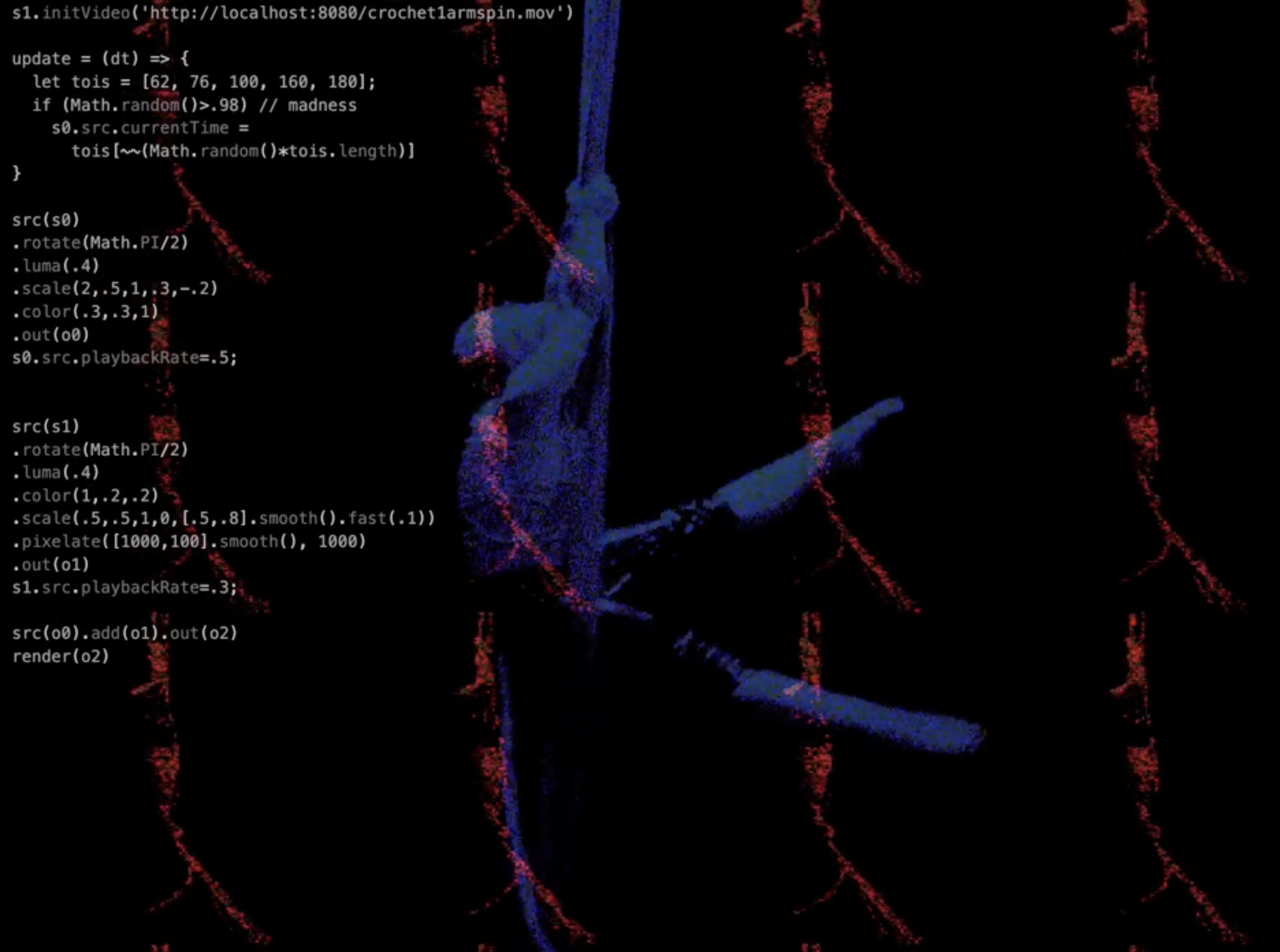
Made while I was ill and sequestering in my friends’ guest room in a cabin in New Hampshire. This is the first time I realized I could open a stream to one longer video, and access different points of the stream dynamically (I initially imported a lot of short clips, which was not workable memory-wise and reliably crashed the browser). tois is an array of “times of interest” that I preselected based on familiarity with the video. I’m playing mostly with layering and playbackRate, which I find to be an effective modulator when combined with the FFT of the audio playing. ...

No Para Act

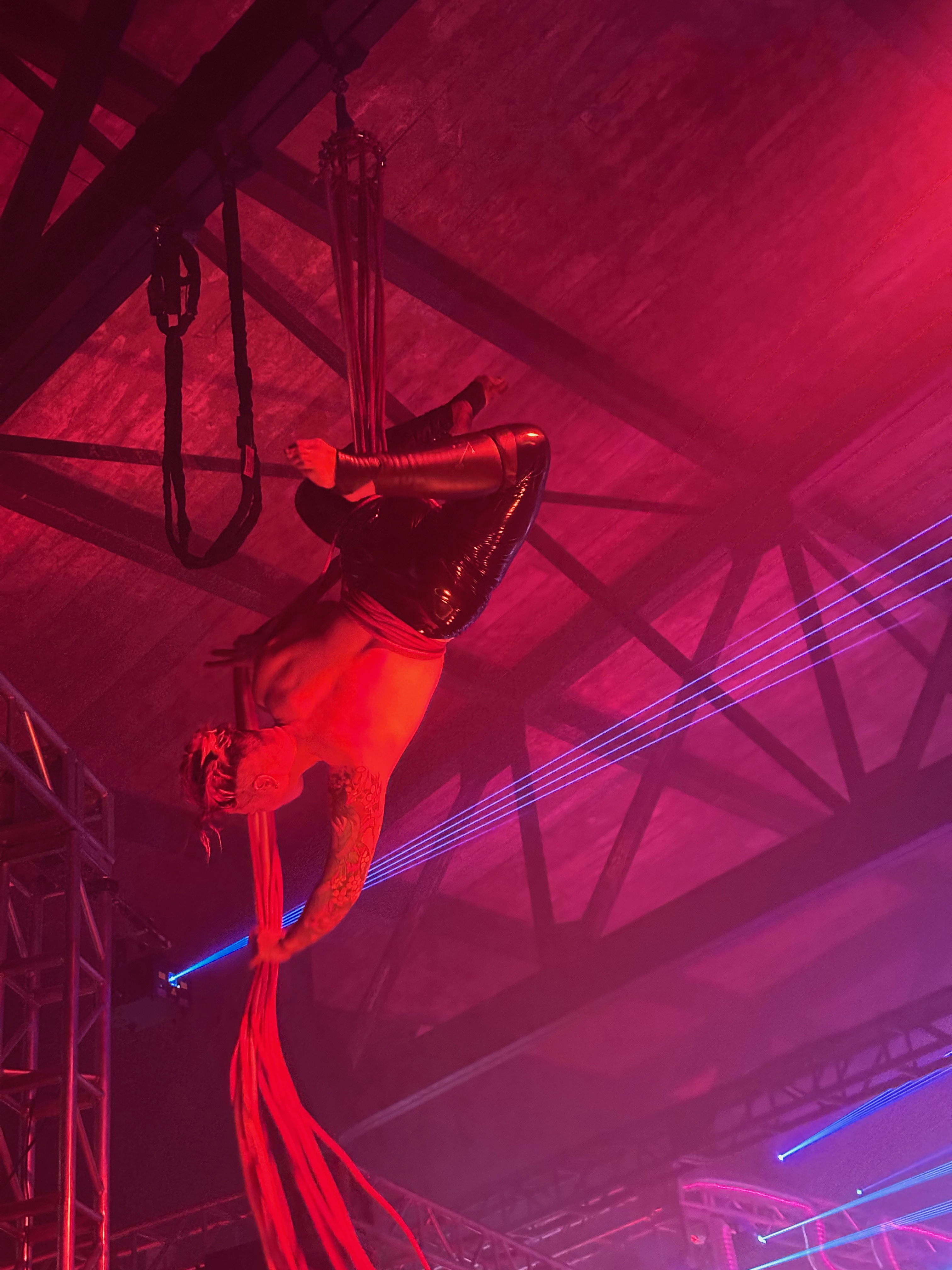
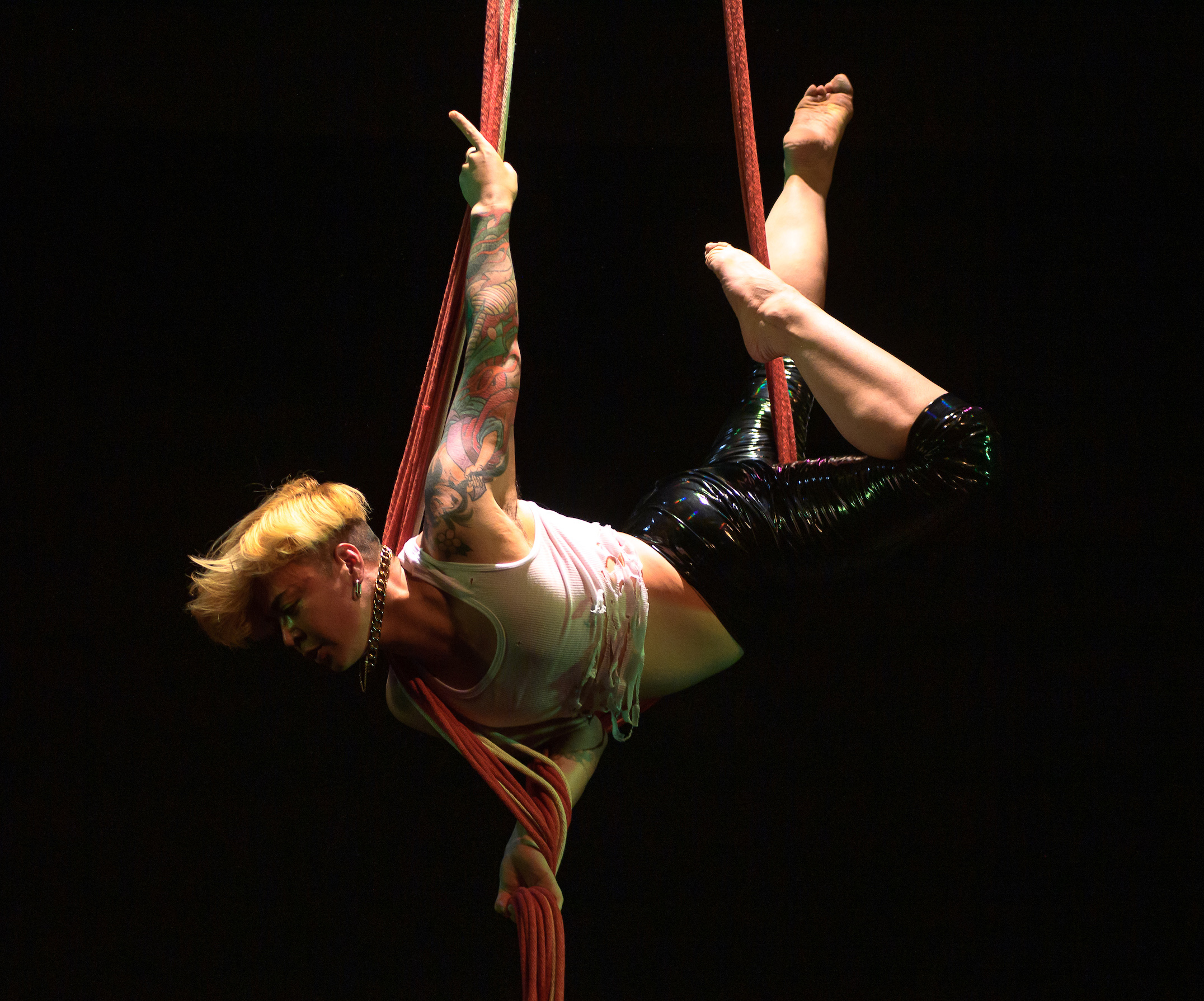
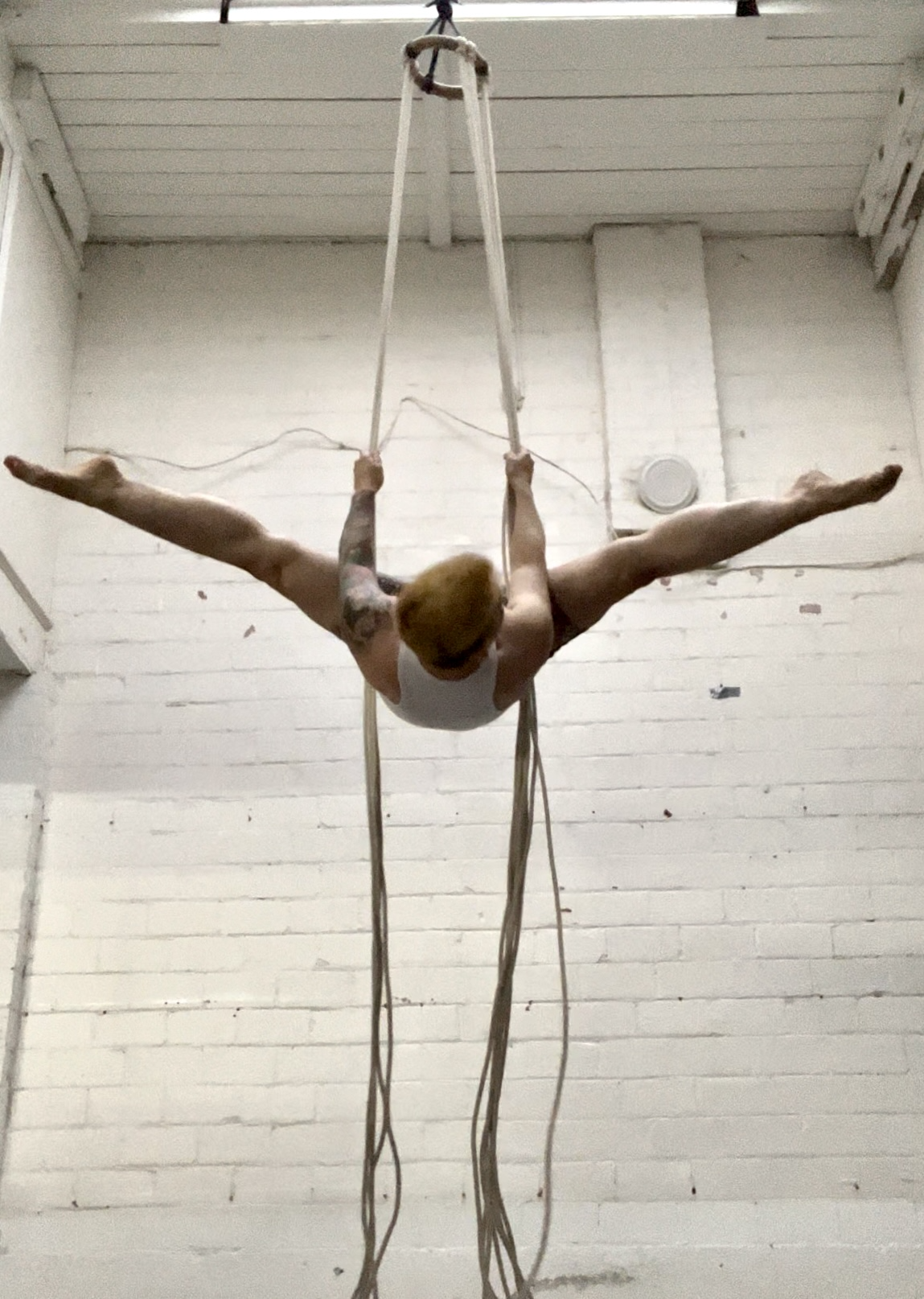
Performance at Kinetic Arts’ Summer Circus Celebration was good despite my act being quite unpolished (I finished it a week before). This was my first time performing multicordes in about 3 years. Apparatus changes I was excited to develop a spinning concept for the first time (this required that I change the hardware from a straight bar and tune the height of the cordes: ideally the cordes are just above the ground so friction doesn’t degrade spinning over time). ...
Photo by Rowan Littell

Livecoding SFPC class 1

Thoughts on reading from ‘Live-Coding: A User’s Manual’. The reading My favorite is the “thinking in public” definition. I like to interpret this as working through problems while the audience has transparency to what you are doing. If there isn’t the observed tackling of an issue, then it’s just the performance of a known process (which itself is also interesting… I love process videos on instagram that document cooking or carpentry – however I think these process videos aren’t live-coding if you aren’t allowing the audience to see the process in real-time). [For this reason I often like to incorporate a constraint or a challenge during my devised live-coding performances, because I want the audience to see me struggle in the process.] ...

Multicordes Act Dev

Just got back from a 5-week stint in Asia to see family and friends and hitting the ground running to condition and develop my multicordes act for Kinetic Arts’ summer festival. I like this festival because it’s a well-equipped venue where you exhibit mainly to other aerialists, who are better-equipped to appreciate artistry than a naïve audience.

TeamLab Mori

I’m trying to make a habit of what I find works for me when viewing others’ more established lighting and immersive design installations. Things I appreciated about TeamLab Borderless @ Mori (Roppongi) Cohesion between different exhibits e.g. the steam entrance showing a different exhibit’s perspective, same music Different ways of having the viewer relate to the space being surrounded by lighting (with unknown scale), vs. with known scale (lilypads, plus the transition from “underwater” to “above water”), vs. the lighting is using you as a frame of reference (moving orbs on tracks) Total seamlessness of operation / highly predictable / very robust teahouse Harnessing existing constraints for useful noise (vibration of the moving orbs) – thus elegantly using the strengths of the installation’s implementation in one’s favor rather than overengineering. moving orbs on tracks

Superior Information Position

How do I ensure my future? How do I maintain a superior information position (on art, dance, consumption, creation, the hype in my community, accessing the resources I care about)?

multicordes act development

trying out some written documentation for this act with sable from ground, tension lock climb start with russian entry to tension (left foot crosses to right, positions as if russianing, right foot pokes through and replaces, should end in a tension wrap) (my mnemonic: cordes lie across the top of the foot, mirroring line of toes, with the pole in the direction of the big toe) one-arm handstand figure out which wrap to do? currently doing the “boxy” “diy trapeze” one descend to croc ...

performance vs documentation

getting show photos or videos back from a performance always reminds me that i’m a visual artist first and a performing artist second. i dove deeply into circus because it was such a boon to my mental health. my technical skills and artistic expression in that modality developed in parallel to my documentation of it, and when i train i often don’t realize that i am much more concerned with producing visual media for consumption rather than performance. ...