For Gina’s show (“Pieces” at Parker Electric) I helped erect the rig the day prior; I then did a test run and confirmed that my act would be quite different if I wasn’t able to spin.
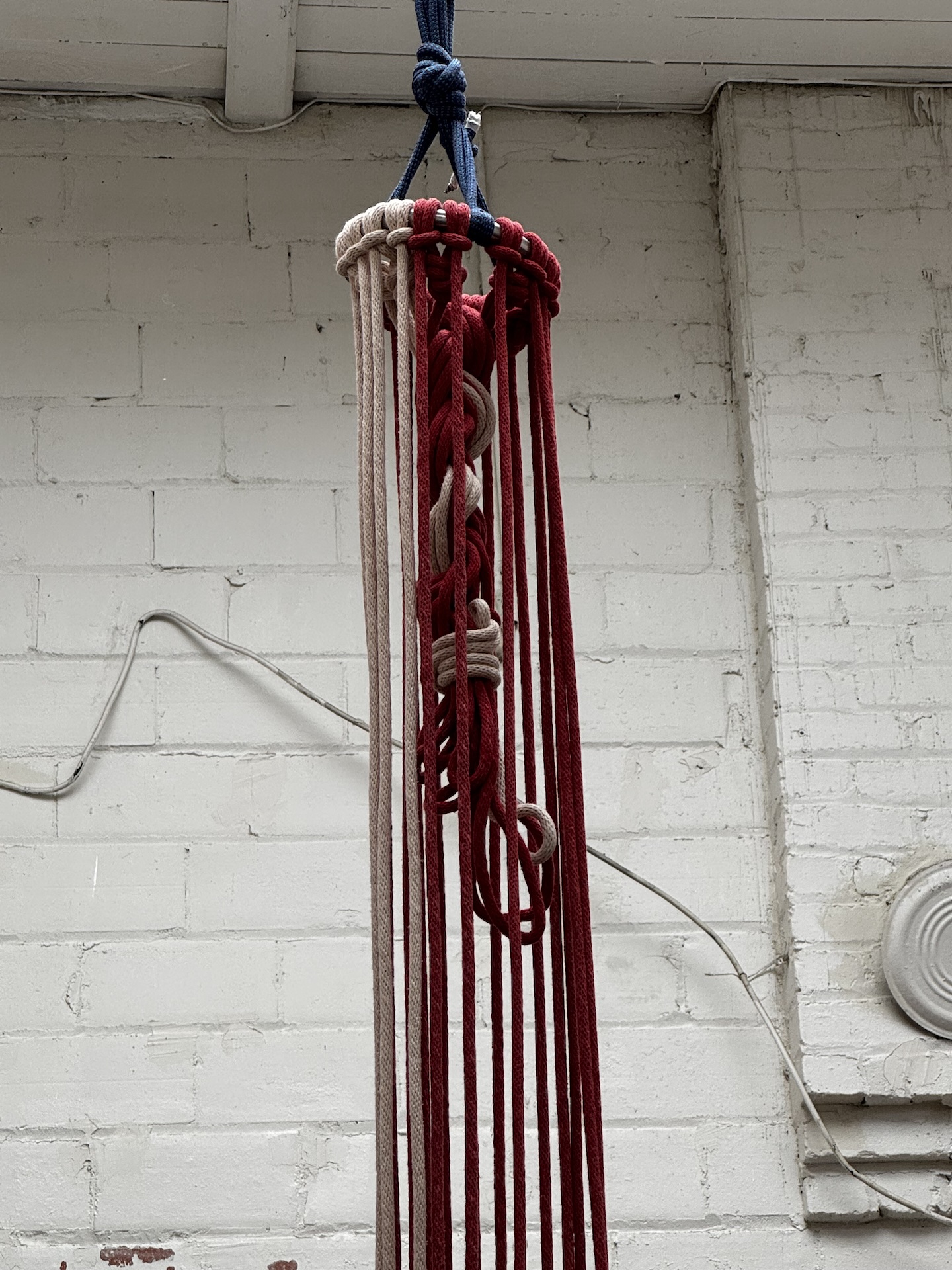
Because the cords were longer and extended onto the floor, it (1) generated a terrifying whip effect as about 6’ of rope rapidly rotated around me (2) the spin quickly attenuated from the drag and left me static for a lot of my act.
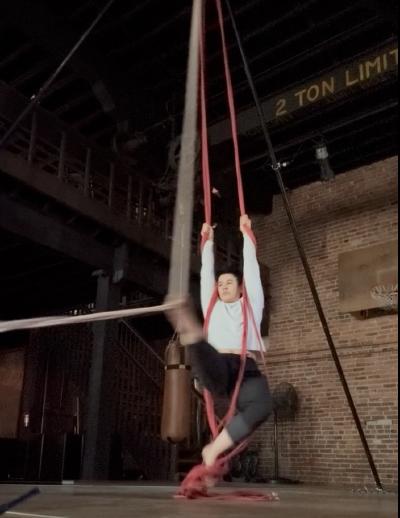
I decided it would be worth the effort to figure out how to keep the spin if I could.
I went home and first checked how long my other cords were (they were much shorter, about 12-13’), then thought about cutting my cordes (eep!), then remembered that there were techniques for shortening silks and maybe there might be something I could use there?
I watched some videos about shortening silks, and realized that just like my cordes, silks were technically girth-hitched around a rescue-8, but then extended up around the rescue-8 to distribute tension. When silks got “shortened”, the bight of the girth hitch gets pulled through and blocked from retracting. Maybe something like this could be achieved with the cordes?
I found demonstrations of a running lark’s head. This basically turns the “hairpin” of the girth hitch into a skinny letter “M”. Blocking the middle piece with an overhand knot reduces slipping up through the bight. The addition of a second girth hitch in the line does not reduce the overall weight limit of what I was using before.
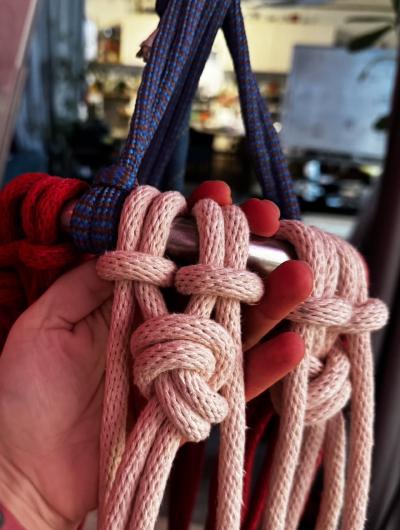
Shortening everything (including lining it up) took about 2 hours. The performance went pretty well and I’m glad there’s a new technique to adjust the cordes for different ceiling heights. I would like to do a proper load analysis on this one day. If you’re an engineer or rigger and have a comment, lmk.